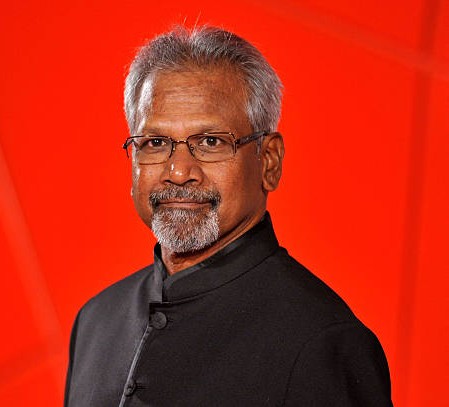
Mani Ratnam is a renowned Indian film director, screenwriter, and producer known for his impactful work in Tamil cinema and his contributions to Telugu cinema and Hindi cinema. Over several decades, Mani Ratnam has built a reputation for blending strong storytelling with technical excellence. His films often explore human relationships, social themes, and emotional conflicts. He is widely regarded as one of the most influential directors in Indian cinema.
Early Life and Family Background
Mani Ratnam was born as Gopala Ratnam Subramaniam on 2 June 1956 in Madurai, Tamil Nadu, India. He was born into a film-oriented family. His father, S. Gopala Ratnam, was associated with film distribution. Growing up in such an environment gave Mani Ratnam early exposure to the workings of the film industry. However, he did not immediately enter films after his studies.
Education Qualification
Mani Ratnam completed his schooling in Chennai. He later graduated in commerce from Vivekananda College, Chennai. After his undergraduate studies, he pursued a Master of Business Administration. Before entering cinema, he worked as a management consultant. This corporate background shaped his disciplined and structured approach to filmmaking.
Formal Training In Film Institutes For Direction, Acting etc
There is no recorded evidence that Mani Ratnam received formal training in film direction or attended a film institute for filmmaking. His entry into cinema was not through film school but through practical involvement in the industry.
Direction Career and Rise to Fame
Mani Ratnam made his directorial debut with the Kannada film Pallavi Anu Pallavi in 1983. The film marked the beginning of his journey as a filmmaker. He later directed films in Tamil and Telugu, gradually establishing his identity as a distinctive storyteller.
His breakthrough came with the Tamil film Mouna Ragam in 1986. The film received critical and commercial success and brought him wide recognition. He continued his rise with Nayakan in 1987, which became one of the most acclaimed films in Indian cinema. The film earned international attention and strengthened Mani Ratnam’s standing as a major director.
In the 1990s, Mani Ratnam expanded his influence across Indian cinema. Roja in 1992 introduced him to a national audience and was also dubbed into multiple languages. The film’s success enhanced his presence in Telugu cinema and Hindi-speaking regions. Bombay in 1995 and Dil Se in 1998 further established him as a filmmaker capable of handling large themes with emotional depth.
Throughout his career, Mani Ratnam has worked across Tamil, Telugu, Hindi, Kannada, and Malayalam films. He is also the co-founder of the production company Madras Talkies, through which he has produced several projects.
In recent years, he directed the epic historical drama Ponniyin Selvan Part I in 2022 and its sequel Ponniyin Selvan Part II in 2023. These films showcased his ability to mount large-scale productions while maintaining narrative focus.
Notable Achievements and Contributions to Cinema
Mani Ratnam has received multiple National Film Awards and Filmfare Awards South during his career. His films are known for strong character arcs, innovative cinematography, and memorable music collaborations. He has frequently worked with leading technicians and composers, creating a distinct cinematic style.
His work in Telugu cinema includes directing and presenting films that connected with audiences beyond Tamil Nadu. By releasing and dubbing films across languages, Mani Ratnam helped bridge regional industries and brought South Indian storytelling to a broader national platform.
He has also contributed as a screenwriter and producer. Through Madras Talkies, he has supported new talent and meaningful cinema. His films often combine commercial appeal with artistic quality.
Legacy and Influence
Mani Ratnam is considered a transformative figure in Indian cinema. His films influenced a generation of filmmakers in Tamil cinema and Telugu cinema. He brought realism, emotional complexity, and technical sophistication to mainstream films.
Many directors and writers regard Mani Ratnam as a pioneer who redefined narrative style in South Indian films. His consistent focus on strong storytelling and visual craft has ensured his place among the leading directors of India. His body of work continues to inspire audiences and filmmakers across the country.